

Honestly, some of my happiest childhood memories involve the smell of cinnamon and vanilla drifting from the kitchen on a Saturday morning. My mom would whip up her famous french toast, and the whole house just felt... lighter. The first time I tried to make it myself, though? Oh boy. I ended up with a sad, soggy mess that barely resembled anything edible. I didn't expect that! But I was determined. This classic french Toast isn't just a recipe, it's a little piece of home, a warm, golden hug that transforms ordinary mornings into something truly magical and comforting.
I still laugh thinking about the time I tried to get fancy and use some really old, rock-hard artisanal bread, thinking it would soak up the custard like a sponge. Oops! It just stayed stiff and refused to cooperate, giving me more of a 'crispy toast' than a french toast. Or the morning I was half-asleep and completely forgot to grease my griddle. Let's just say scraping off burnt sugar bits isn't my favorite way to start the day. Lesson learned: even simple things need a little attention!
Ingredients
- Brioche or Challah: Don't skimp here, hon. This is the foundation. That rich, slightly sweet bread soaks up the custard beautifully. I tried plain white bread once, and it was... fine, but brioche just elevates this Classic French Toast to another level.
- Large Eggs: The binder! You want good, fresh eggs. I swear I can taste the difference. Don't worry if one cracks a little when you're whisking, kitchen chaos is part of the charm.
- Whole Milk: Full-fat, please! Skim milk just doesn't give you that creamy, rich texture we're aiming for. Honestly, just don't use it. I did once, and it tasted watery, not the comforting Classic French Toast I wanted.
- Granulated Sugar: Just a touch to sweeten the custard. It melts into the bread, giving it that subtle sweetness. Too much, and it burns, too little, and it's bland. It's a balancing act!
- Pure Vanilla Extract: A splash of pure magic. I always go for pure vanilla, the imitation stuff just doesn't have the same warmth. It's like a secret ingredient that whispers 'comfort' into your Classic French Toast.
- Ground Cinnamon: This is non-negotiable for me. The smell alone transports me back to childhood. I'm a bit heavy-handed with it, but you do you! It just makes the house smell incredible while cooking.
- Unsalted Butter: For the pan, always. It gives that gorgeous golden-brown crust and a nutty flavor. I tried olive oil once, thinking 'healthy,' but it just wasn't the same. Butter makes everything better, especially for Classic French Toast.
- Maple Syrup: Real maple syrup, not the fake stuff. Please. It's the crown jewel, the sticky, sweet, amber goodness that ties everything together. I get mine from a local farm, and it’s always worth the splurge.
- Powdered Sugar: A delicate dusting, like fresh snow. It just looks so pretty and adds another layer of subtle sweetness. I always forget to sift it first, so I usually end up with a few little lumps, but hey, that's real life!
- Fresh Berries (optional): For a pop of color and freshness. Strawberries, blueberries, raspberries whatever looks good at the market. They cut through the richness a bit, which is nice for Classic French Toast.
Instructions
- Prep Your Bread Slices:
- First things first, get your bread ready. I usually slice my brioche about 3/4 to 1 inch thick. Not too thin, or it'll fall apart, not too thick, or it won't soak up enough custard. I've definitely sliced it too thin before, and it turned into sad, floppy pieces. Lay them out on a wire rack for a bit if they're super fresh a slightly stale loaf actually works better for Classic French Toast because it absorbs more without getting mushy. This is where you get to decide how hearty your slices will be!
- Whisk the Custard Magic:
- Now for the good stuff! In a shallow dish (a pie plate works wonders for dipping, I find), crack your eggs. Add the whole milk, granulated sugar, vanilla extract, and that glorious ground cinnamon. Whisk it all together until it's super smooth and everything's combined, no streaks of egg yolk left. I always get a little too enthusiastic and splash a bit on the counter, but that's just part of the process, right? This creamy mixture is what gives your Classic French Toast its signature flavor.
- Soak it Up (Carefully!):
- This step is key to avoiding soggy French toast, which is a common oops moment for me. Gently place a slice of bread into the custard, letting it soak for about 15-20 seconds per side. You want it saturated, but not drowning. If your bread is on the staler side, you might give it an extra few seconds. I once left a slice in too long, got distracted by a text, and it completely disintegrated when I tried to pick it up. Learn from my mistakes! You're aiming for that perfect balance for your Classic French Toast.
- Heat the Griddle:
- While your bread is soaking, get your griddle or a large non-stick skillet heating over medium heat. Melt a good pat of unsalted butter in the pan. You want it shimmering, not smoking. If it starts to smoke, your heat's too high, and you'll burn the butter before your French toast even hits the pan. I've done that, and the smell of burnt butter is not the happy morning aroma you're going for. This step ensures your Classic French Toast gets that beautiful golden crust.
- Cook to Golden Perfection:
- Carefully transfer your soaked bread slices to the hot griddle. Don't overcrowd the pan, give them space to breathe and cook evenly. Cook for about 2-4 minutes per side, until they're beautifully golden brown and cooked through. You'll see the edges firm up, and the center will feel soft but not squishy. The house will start to smell incredible, like a bakery! This is where your Classic French Toast really comes to life, turning into those irresistible golden squares.
- Serve with All the Fixings:
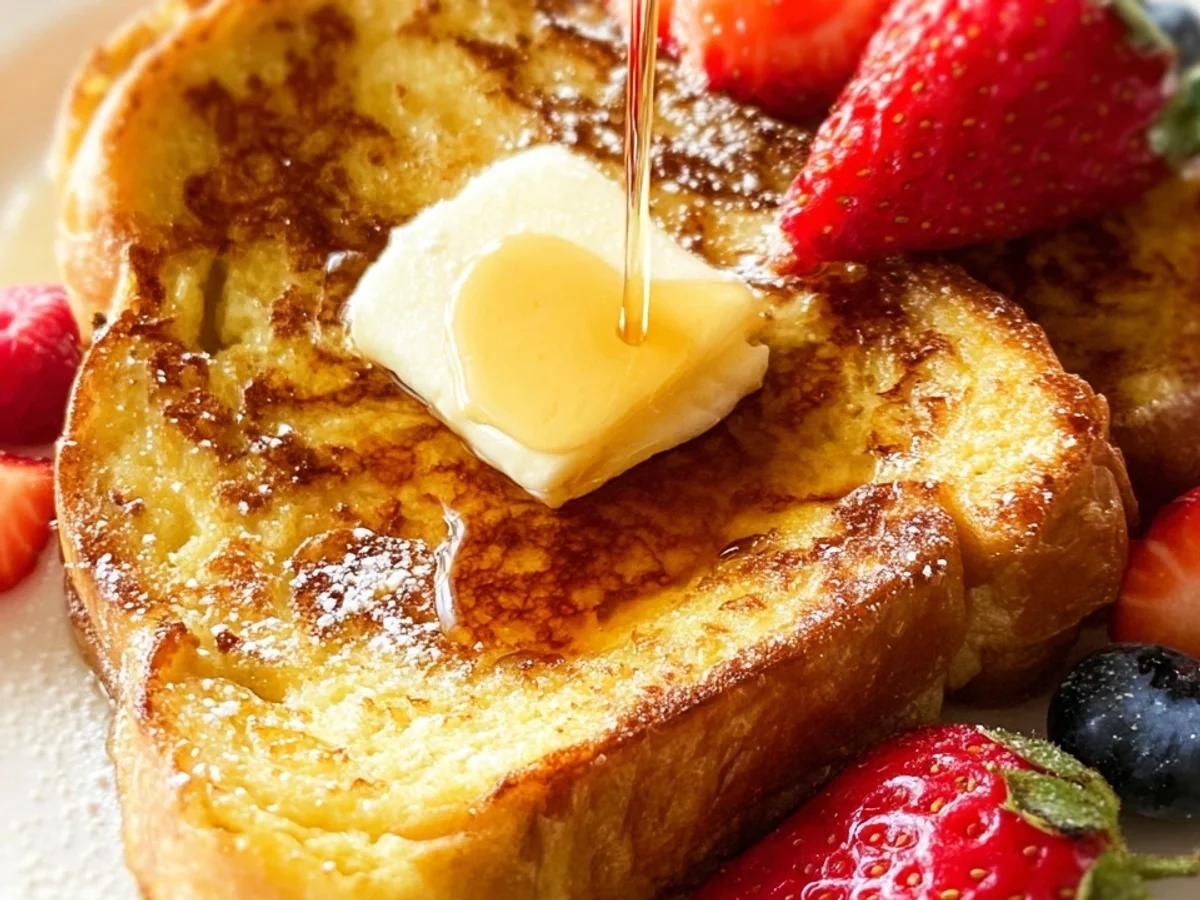
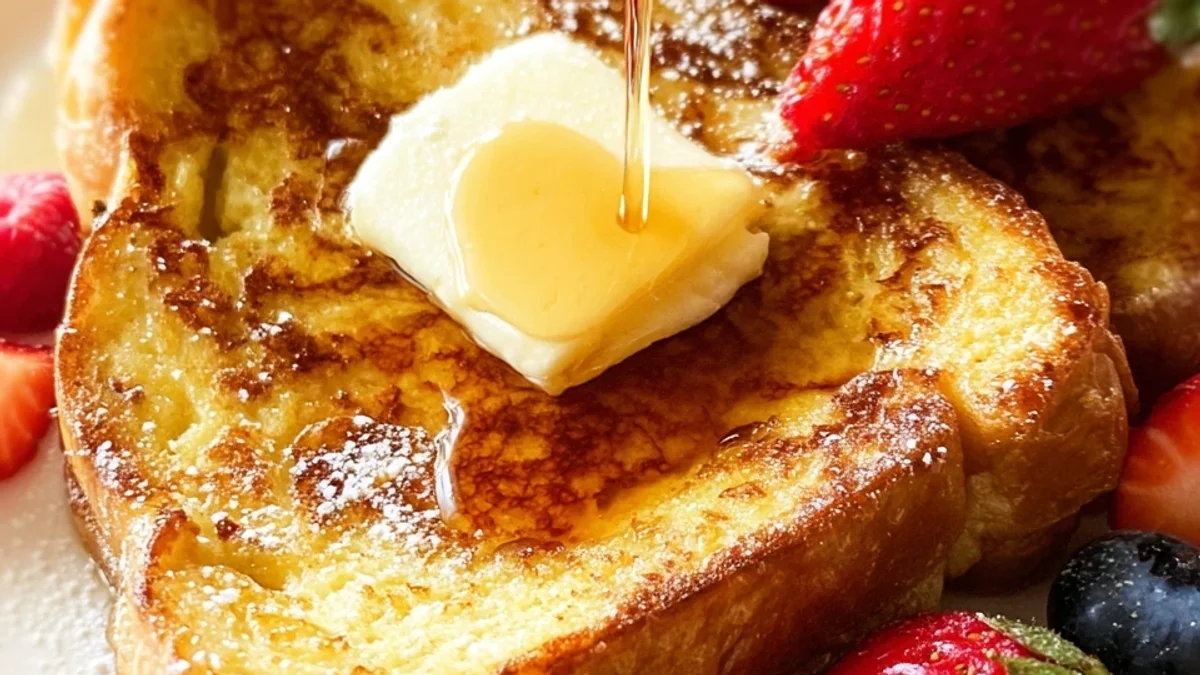
- Once cooked, transfer your Classic French Toast to a plate. Dust generously with powdered sugar (or forget to sift, like me, and embrace the charming lumps!). Pile on some fresh berries, and, this is crucial, drizzle with plenty of real maple syrup. I like to serve them straight from the griddle, hot and fresh. Honestly, this is the best part seeing those golden slices ready to be devoured. Enjoy your delicious Classic French Toast, you've earned it!
There's something so incredibly satisfying about pulling a batch of these golden beauties off the griddle, especially when the kitchen is a bit messy from all the whisking and dipping. It reminds me of those mornings when everything feels a little chaotic but ends with something utterly delicious. The kids always gather around, eager for the first bite. It’s those small, imperfect moments that make cooking Classic French Toast so special, really.
Storing Classic French Toast
Okay, so here's the deal with storing Classic French Toast. If you have leftovers (which, honestly, is rare in my house!), let them cool completely first. Stack them with parchment paper in between to prevent sticking, then pop them into an airtight container. They'll keep in the fridge for about 2-3 days. Reheating is where it gets tricky, I microwaved it once, and they turned out a bit rubbery and lost that lovely crispness so don't do that lol. My favorite way to reheat is in a toaster oven or even a regular oven at 350°F (175°C) for about 5-10 minutes until warmed through and slightly crispy again. You can also freeze them for up to a month, again with parchment between slices, then just reheat from frozen in the oven or toaster oven.

Classic French Toast Ingredient Swaps
I've played around with substitutions for this Classic French Toast quite a bit, mostly out of necessity when I'm missing something. For the bread, challah is a fantastic alternative to brioche, it's got that same rich, eggy texture. I tried sourdough once, and it worked... kinda, but the tanginess was a bit much for me. For milk, you can use a plant-based milk like almond or oat milk, but go for the full-fat versions to maintain creaminess. I've used almond milk when I was out of whole milk, and it was decent, but not quite as luscious. If you're out of vanilla extract, a tiny pinch of nutmeg can add a lovely warmth, though it changes the flavor profile entirely. I even swapped cinnamon for pumpkin pie spice once, and it was a surprisingly delightful fall-themed Classic French Toast!
Serving Your Classic French Toast
A plate of Classic French Toast isn't just food, it's an experience. Beyond the maple syrup and berries, I love serving it with a side of crispy bacon or savory breakfast sausage for that sweet and salty contrast. A dollop of whipped cream and a sprinkle of toasted pecans can make it feel extra fancy, especially for a special occasion. And for drinks? A strong cup of coffee or a tall glass of freshly squeezed orange juice complements it beautifully. Honestly, this dish and a lazy Sunday morning, maybe with a good book or some soft jazz playing? Yes please. It's the kind of meal that makes you want to linger at the table.
The Classic French Toast Backstory
The story of French toast is actually quite fascinating, and it's not even originally French! It’s believed to have roots in the Roman Empire, where stale bread was soaked in milk and eggs, then fried, to prevent waste. It's been called 'poor knight's pudding' in England and 'pain perdu' (lost bread) in France, reflecting its humble origins of reviving stale bread. For me, discovering this history made me appreciate my Classic French Toast even more. It’s a testament to human ingenuity and the simple joy of transforming basic ingredients into something comforting and delicious. It feels like a culinary tradition passed down through generations, and I love being a part of that.
Making this Classic French Toast always brings a smile to my face. It's a reminder that some of the simplest dishes hold the most comfort and joy. Even with my occasional kitchen mishap, the end result is always worth it golden, tender, and just utterly delicious. I hope this recipe brings a little bit of that warmth and happiness to your kitchen too. Please, tell me about your own French toast adventures in the comments!

Frequently Asked Questions
- → My Classic French Toast always comes out soggy, what am I doing wrong?
Oh, I've been there! Usually, it's either soaking the bread for too long or using bread that's too fresh. Try using slightly stale, thick-cut bread and only soak it for 15-20 seconds per side. Also, make sure your griddle is hot enough!
- → Can I use different types of bread for Classic French Toast?
Absolutely! While brioche or challah are my favorites for a truly decadent Classic French Toast, you can experiment. Texas toast works well, and even a good quality sandwich bread can do in a pinch. Just avoid anything too dense or too thin.
- → How do I get that beautiful golden-brown crust on my Classic French Toast?
The secret, my friend, is butter and proper heat! Make sure your griddle is at medium heat, and melt a generous pat of unsalted butter before adding your soaked bread. Don't overcrowd the pan, and be patient for those 2-4 minutes per side.
- → Can I make the custard ahead of time for Classic French Toast?
You totally can! Whisk up the custard mixture, cover it, and keep it in the fridge for up to 24 hours. Just give it a quick whisk again before dipping your bread. It's a great little time-saver for a busy morning, making your Classic French Toast even quicker.
- → What are some fun variations for Classic French Toast?
Oh, the possibilities! You could add orange zest to the custard for a citrusy twist, or a splash of rum extract for something grown-up. Try stuffing it with cream cheese and berries before cooking, or even making a savory version with herbs and cheese. Get creative with your Classic French Toast!