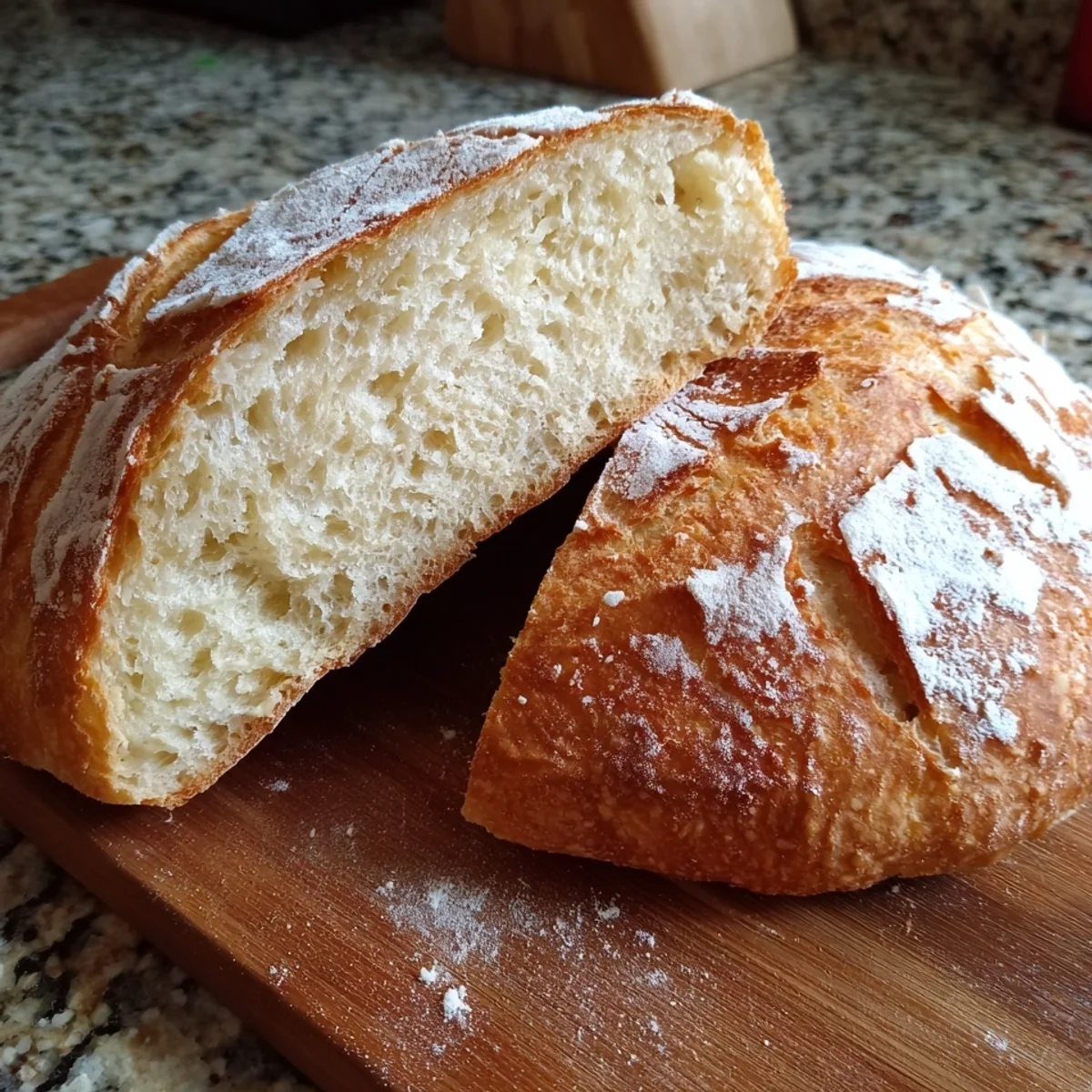


You know how sometimes you just crave that fresh-baked bread smell? For years, I thought it was a weekend-long project, full of kneading and waiting. Then, a few years back, I stumbled upon a simple recipe that promised homemade bread in just a couple of hours, with no fuss. I was skeptical, to be real, but my first loaf changed everything. It felt like magic, and my kitchen has smelled like a bakery ever since. Seriously, it's a game-changer!
Oh gosh, my first attempt at this recipe was... eventful. I got so excited, I forgot to preheat the Dutch oven properly. The bread came out looking a bit pale and sad, almost like a deflated pillow! I didn't expect that. My husband, bless his heart, tried to say it was 'rustic.' We still laugh about it. Lesson learned: don't skip the hot pot!
Ingredients for Your Perfect No Knead Bread Loaf
- 2 1/2 cups unbleached all-purpose flour: This is our main workhorse, friends! Unbleached AP flour gives our loaf a lovely, mild flavor and a tender crumb. I've tried bleached before, and it just doesn't quite have the same chew or natural color. Plus, I just feel better using less processed ingredients, you know? It’s the foundation for that perfect texture we’re aiming for in our homemade bread.
- 1/2 cup bread flour: Okay, here's my secret weapon for that extra chewiness! Adding a bit of bread flour, with its higher protein content, gives this No Knead Bread structure and that satisfying pull you want in a rustic loaf. It makes a noticeable difference in the texture, preventing it from being too crumbly. Don't skip it if you want that bakery-quality bite.
- 2 cups filtered warm water (105-115°F): Water temperature is SO crucial, my friends. Too cold, and your yeast will be sluggish, too hot, and you'll kill it! I always use filtered water because my tap water can be a bit funky, and it makes a difference in taste. Aim for warm bathwater temp just right to wake up that yeast and get our dough happy and bubbly.
- 1 1/2 teaspoons instant yeast: Instant yeast is my go-to for this quick recipe. No need to proof it separately, just toss it in with the dry ingredients! It's super reliable and gets our dough bubbling away quickly, which is key for our 2-hour timeline. Make sure it's fresh, otherwise, your loaf might be a bit flat an oops moment I've had before with old yeast!
- 1 1/2 teaspoons fine sea salt: Salt isn't just for flavor, though it makes a huge difference there! It also helps control the yeast activity and strengthens the gluten structure. Fine sea salt dissolves beautifully and spreads evenly throughout the dough. Don't skimp on it, or your bread will taste bland, too much, and it'll slow down the rise. Balance is key!
- 1 teaspoon pure honey: A touch of honey does wonders for the flavor and crust color. It's a natural sweetener that feeds the yeast ever so slightly, giving our No Knead Bread a beautiful golden-brown crust and a subtle sweetness that complements everything. I prefer pure honey for its nuanced flavor over just sugar alone, it just adds that extra depth.
Baking Your Own No Knead Bread: Step-by-Step
- Step 1: Mix Dry Ingredients:
- Alright, let's get this No Knead Bread party started! Grab your biggest mixing bowl. Toss in your flours, yeast, sugar, and salt. Give it a good whisk. You want everything super well combined here, so there are no hidden pockets of unmixed ingredients. This step is easy-peasy, but setting the stage properly ensures a consistent rise and flavor throughout your beautiful loaf. Don't rush it, even though it's simple!
- Step 2: Add Wet Ingredients:
- Now for the wet stuff! Pour in your warm water, that gorgeous olive oil, and the tiny splash of apple cider vinegar. The vinegar, by the way, is my secret trick for a better crumb and a subtle tang you won't taste it directly, but it enhances the flavor of your delicious No Knead Bread. Stir it all together with a spatula until there are no dry spots left. It'll be a shaggy, sticky mess, and that's exactly what we want. Cover it up!
- Step 3: First Rise (Bulk Ferment):
- This is where the magic really happens for our No Knead Bread! Let that shaggy dough sit at room temperature for about 1.5 hours. You'll see it transform, bubbling and growing, almost doubling in size. The yeast is doing all the work, building flavor and strength without you lifting a finger. If your kitchen is cold, find a warm spot maybe near a sunny window or even in a turned-off oven with the light on. Patience is a virtue here!
- Step 4: Preheat Oven & Pot:
- About 30 minutes before your first rise is done, get that oven screaming hot to 450°F (232°C)! And here's the really important part: pop your Dutch oven (with its lid!) inside to preheat too. A super hot pot is crucial for that amazing, crispy crust on your homemade loaf. Seriously, this step makes or breaks the crust. Don't rush it, let that pot get good and fiery hot!
- Step 5: Shape & Final Proof:
- Time to gently shape our dough! Lightly flour your counter. Carefully scrape out the risen dough it'll be sticky, don't worry. Gently fold the edges towards the center a few times to create a roundish shape. Don't overwork it! Dust it with a little extra flour, place it on parchment paper, and let it rest for a quick 20-30 minutes while your oven finishes preheating. This brief final proof helps it relax before hitting the heat.
- Step 6: Bake the Loaf:
- Carefully, oh so carefully, take your blazing hot Dutch oven out of the oven. Use oven mitts, please! Gently lower your dough (still on its parchment) into the hot pot. Pop the lid back on and bake for 30 minutes. Then, remove the lid and bake for another 15-20 minutes until it's gloriously golden brown and sounds hollow when tapped. That's how you get that perfect, irresistible crust on your amazing No Knead Bread!
There's just something so deeply satisfying about pulling a warm loaf of bread out of the oven. The smell, the crackle of the crust it's pure kitchen therapy. Every time I make this, I feel like a culinary wizard, even though it's ridiculously simple. It takes me back to my grandma's kitchen, where everything smelled like home.
Keeping Your No Knead Bread Fresh: Storage Secrets
Okay, so you've got this gorgeous loaf, and if it even lasts past the first hour (mine rarely does!), you'll want to store it right. My biggest mistake? Sticking it in a plastic bag while it's still warm hello, soggy crust! Nope. Let it cool completely first. Then, I usually store it cut-side down on a cutting board, covered with a clean kitchen towel. It keeps that crust crispier for a day or two. For longer storage, a bread box works wonders, or you can slice it and freeze individual pieces. Just pop a slice in the toaster from frozen, and it's like fresh-baked all over again. No more wasted bread for me!

Swapping Ingredients for Your No Knead Bread
I've played around with a few substitutions for this recipe, so let me share my trials and errors! If you don't have bread flour, you can use all unbleached all-purpose, but you might lose a tiny bit of that chew. Still good, just slightly different. For the honey, maple syrup works okay in a pinch, or just skip it entirely if you prefer, though I love the color it gives. As for the apple cider vinegar, white vinegar is fine, or you can omit it if you don't have any it's a subtle enhancer, not a deal-breaker. I haven't tried whole wheat flour, but I suspect it would need more water and a longer rise. Stick to the flours specified for best results, trust me, I've had some dense loaves trying to get too creative!
Serving Up Your Delicious No Knead Bread
Oh honey, the serving possibilities for this homemade bread are endless! My favorite way? Sliced thick, slathered with good quality butter and a sprinkle of flaky sea salt. Pure heaven. It's also incredible dipped into a rich olive oil with some balsamic vinegar, maybe even a little dukkah if you're feeling fancy. It makes the best grilled cheese sandwiches, hands down, and is the perfect companion for a hearty soup or stew. Leftovers (if you have any!) are fantastic for bruschetta or even torn into croutons. Honestly, just about anything tastes better with a warm slice of this bread beside it. Get creative!
The Story Behind No Knead Bread: A Quick History
The whole 'no knead bread' phenomenon really exploded thanks to Jim Lahey from Sullivan Street Bakery in NYC. Back in 2006, he shared his super simple, long-fermentation recipe, and it took the home baking world by storm! Before that, homemade bread felt like a daunting, labor-intensive task for many. His method, which relies on time and hydration rather than muscle, democratized bread baking. My own version here is a quicker, slightly adapted take on that genius concept, designed for those of us who want that bakery-quality loaf without waiting 18 hours. It's a testament to how traditional techniques can be simplified for modern kitchens, and I'm so glad I found it!
And there you have it, my friends! Your very own, incredibly easy, utterly delicious homemade loaf. This recipe has brought so much joy to my kitchen, and I hope it does the same for yours. There’s nothing quite like the smell and taste of a fresh loaf. Give it a try, snap a pic, and share your baking triumphs with me! I can’t wait to hear about your loaves.

Your Burning Questions About No Knead Bread, Answered!
- Can I use cold water instead of warm?
Using cold water will slow down your yeast significantly, meaning your rise times will be much, much longer. Warm water (think bathwater temp, 105-115°F) is key to waking up that instant yeast quickly for our 2-hour bake. Don't skip the warm water!
- Why is my bread crust not crispy?
A non-crispy crust is usually due to not preheating your Dutch oven long enough, or not baking it uncovered for sufficient time. Make sure that pot is screaming hot before the dough goes in, and let it get beautifully golden after the lid comes off. Steam is your friend!
- Can I make this dough ahead of time?
While this is a quick recipe, you can make the dough and let it cold ferment in the fridge for up to 24 hours after the initial rise. Just remember to let it come to room temp for about an hour before shaping and baking. It develops even more flavor!
- What if my dough isn't rising?
If your dough isn't rising, your yeast might be old or the water was too hot (killing it). Always check yeast expiration dates. Also, ensure your kitchen isn't too cold, yeast loves a warm, cozy spot to do its work for a perfect rise.
- Do I really need a Dutch oven?
For the best results, yes, a Dutch oven is highly recommended for this recipe. It traps steam, which is essential for developing that beautiful, chewy interior and wonderfully crisp crust. If you don't have one, a heavy pot with a lid might work, but results may vary.